
When You Need to Hear Beauty in the Sounds of a 2020 Year
Maggie Sifuentes • October 29, 2020
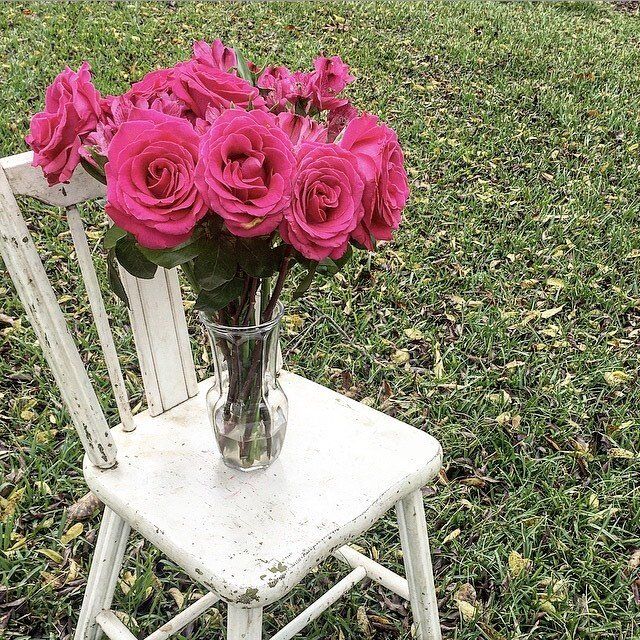
Yesterday morning I was in my favorite little coffee shop where I do the most of my writing. I ordered my salted caramel latte, like I always do when I’m there, and I turned back to the story of Paul and Barnabus.
In October of 2016, the story of Paul and Barnabus in Acts 15 was the story that helped me feel some shreds of light and hope in the middle of the divisions that were happening in the country and in the church.
I’ve looked back at it a couple times in the last few weeks, but this week I’ve needed this story in a number of ways.
When I read about Paul and Barnabus it helps me remember how different we all are as people. And even when so many different people all belong to the same body of Christ, we can each see things so differently. Heated disagreements can happen among the most Gospel-minded of people.
In the story, Paul and Barnabus were about to embark on another part of their journey, when their big disagreement happened. Barnabus wanted to take John Mark with them on the trip, but Paul did not.
Paul strongly felt the need to not
have John Mark accompany him and Barnabus on their journey. John Mark had not been there when they needed him before and Paul, from what I see, had a need for traveling companions that he knew he could count on. Maybe it was simply something that Paul strongly needed to be in place in order to go on being the person who God made him to be. It wasn’t that Paul didn’t care about John Mark, but Paul had a need to let him go and trust him to God while he found someone else to partner with them in the work they were doing.
But then Barnabus was a man who was called the “son of encouragement.” It’s part of who he was. Barnabus was all about second chances and lifting people up even after they had gotten it all wrong. Barnabus could not let John Mark go. Even when it meant, in this specific instance, that Paul and Barnabus would part ways in their journey, Barnabus had a need in his spirit to be there for John Mark as someone who believed in him and lifted him up as he grew in his character and in his service to God’s people.
And maybe it wasn’t so much that one or the other was wrong, but that Paul and Barnabus had different gifts as members of the body of Christ and in this story, they each felt a need to take different kinds of paths in order to be the person God made them to be.
Maybe Paul was created to be a kind of person that carried the weight of caring for so many churches on his plate. So much so that he felt a need to clear unnecessary personal relational struggles off of his plate, so that he would be free to do the best he could to carry the big picture of the care of the churches. Maybe Paul was a person that was made to deal more with big picture things.
And maybe Barnabus was created to be this kind of person that cleared this large space on his plate just to carry relational struggles, because personal relationships were that important of a part of him being the person that he was created to be. Maybe Barnabus had a really soft spot in his heart for the individual people that struggled to find their place within the big picture.
Maybe some people are created in a specific way to care for the big picture, and others are created in another way to care for the pieces of the picture.
Because both kinds
of people are just as needed. We each were created to be a different kind of person in the body of Christ and we each have different kinds of needs in order to keep on being that person.
One thing it teaches me is that while some things are black and white in general, there are other things that may only be black and white to the person God made me. While there may be a different set of things that are black and white to the person God made you.
We need the Paul’s who are able sometimes to let people go so that they will be able to carry the big picture that God gave them to carry. And just as much so, we need the Barnabus who can keep believing in someone long after they have gotten all the things wrong.
We need all types of people that there are in the body of Christ. We need the John Mark who is learning to use the person God made him and fails people while He’s learning. We need John Mark to keep learning and growing. To keep on letting God use him. John Mark needs a Barnabus too. And he also needs the Paul’s to keep on caring for the bigger picture that he is part of.
There are so many ways this encourages me during a year like 2020.
During pandemic seasons, some feel it black and white strongly in their person, that they must not do something that has the chances of putting someone else in danger. And some feel it black and white strongly in their person, that people need people, that they need them in person and we have to keep finding ways to move toward each other and keep asking God to cover the risks.
During political seasons, some feel strongly the need to keep quiet about political things. Some feel strongly the need to use their voice. And during political seasons, some are just learning to use their voice, getting it wrong and trying again.
During an election, part of the body of Christ has a heart that goes out most for the big picture of the country. And part of the body of Christ has a heart that goes out the most for the smaller pieces within the bigger picture. We need all parts of the body of Christ.
We don’t need everyone in the body of Christ to do it one certain way, for then we wouldn’t be a body at all. But we do need everyone to keep exercising the person God made them. To keep trusting that God can use them as the person that they are.
In one of my favorite teachings that I’ve heard on spiritual gifts, the community group leader at the group I attend related spiritual gifts to musical instruments. It’s been a couple years since I heard the talk, but it has stuck in my mind ever since. Dewanna Crane said that when God’s people start using their spiritual gifts, sometimes it might sound like a middle school band who just got their instruments. It might sound really off and squeaky. It might just sound like a great big mess. But the only way that the band can learn to play is by continuing to practice.
When I remember that picture it always helps me find more graceful perspectives for myself and for others. If we want to be people who use the spiritual instrument God gave us to play in His symphony, we have to use it, even when we feel like we don’t know what we’re doing. Even when it sounds squeaky and off. But we’ll keep practicing, keep learning how to play this instrument that God gave us to play. And by practice, we’ll each keep learning how to use the instruments we’re given in a way that works together to sing the song of His grace.
Maybe in 2020, we can find beauty in the ways that ourselves and our neighbors are pulling out our instruments to make a noise. Because even when the noises sound squeaky and off, what is underneath it, might just be a lot of us who are longing to learn how to use the instruments that God gave us to play. Maybe a lot of our noises that come out as messy squeaks, are noises that are finding room to grow into the beauty of God’s symphony of Love.
While we keep on in our lifelong learning, may we not forget to keep tuning our instruments, not to the sound of the wisdom of the world, but to the sound of the wisdom of God’s Word, and to the sound of those who come alongside us in Love reaching out a hand to partner with us in practice. May we keep our ears open to the symphony God is playing, remembering that this is not a solo practice. It’s a body intended to work together. May we be at peace with it, when the oboe that we are playing doesn’t sound one thing like our friends violin. And more than anything else, may we keep our eyes more on our Conductor than on the people around us.
What about you?
What’s the hardest part about playing your own instrument during the song of 2020? Is there something about your part to play that you’re asking God to tune right now? How have the squeaks in the symphony been hard to hear this year? What is one thing you can do today to grow in the wonder of our differences and grow in the joy of getting to be a part of the symphony of God?


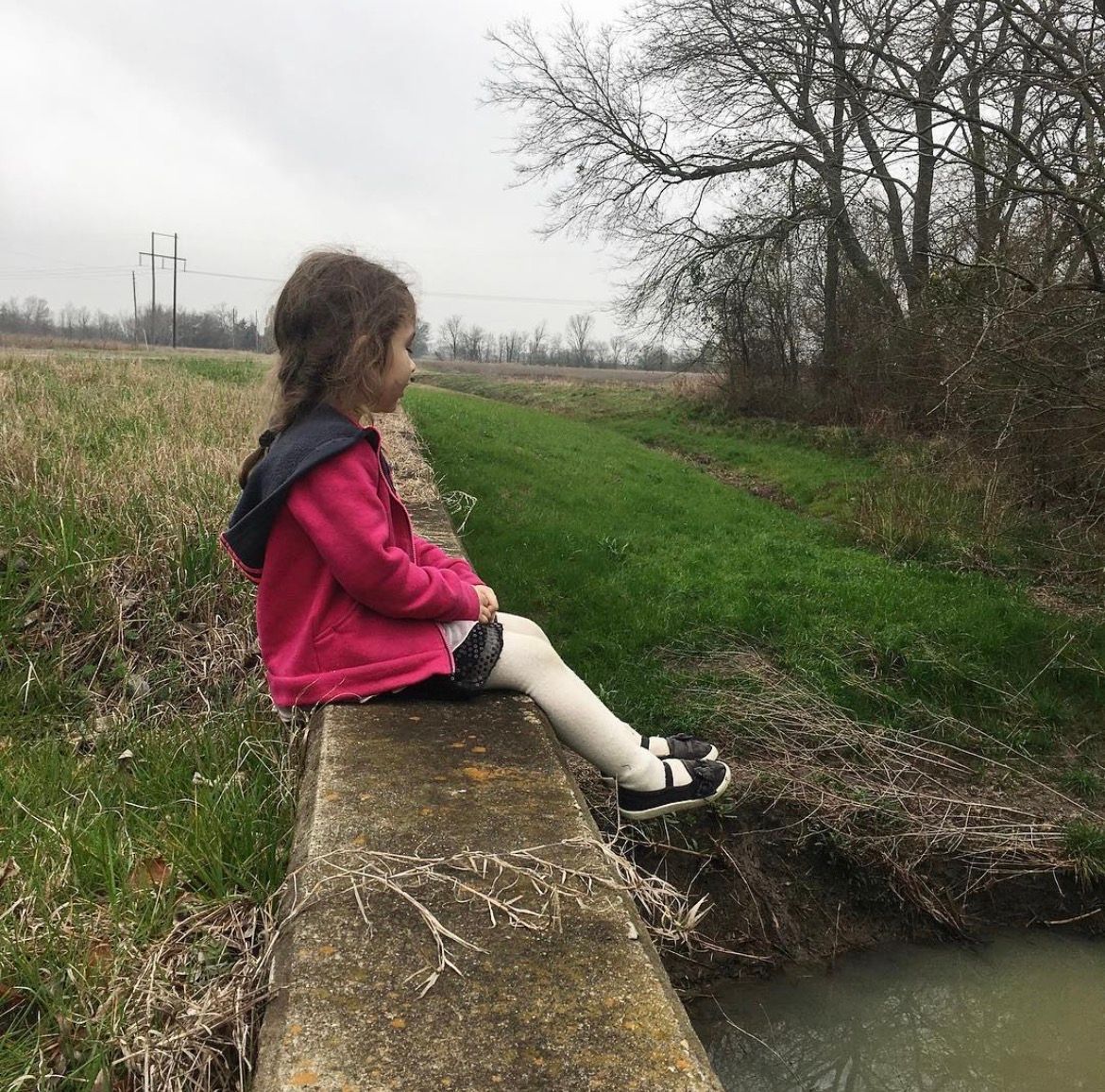
When my daughter Liesel was very small, she wanted to make a robot-like doll. While our girl always kept a creative project going, it felt special to watch her give this robot more care than any project she’d made before. This guy would be her buddy. A cardboard box in the yard became her work station. She gathered air-dry clay, paint, plastic caps, broken toys, and odd pieces of metal. For a four-year-old, she put an immense level of thought into how she wanted to craft him. She painted the pieces, carefully pressing each one into the clay blob of his head. Then, with heartfelt care, she formed his face. Ready for the clay to dry, she showed us her work with utmost delight—the plastic cap eyes painted black and white, the antennae aligned just right. Her new friend was coming to life, and his face lit up her smile. She inserted the piece she would use to form his body and made sure he was comfortable while he dried. But close by hovered the curious toddler hands of Baby Brother. Tragedy struck when he yanked a piece away before the clay fully hardened, damaging her beloved new friend. Tears streaking her face, Liesel’s features twisted in horror. In the awful realization, her voice trembled, hollow and broken. “ Mommy. He is…ruined.” This was nothing like when her towers got knocked down. This was the depths of her heart laid out with love and smashed. I offered all the hugs and comfort I knew how to give, but to her, this devastation seemed more than she could bear. I looked at her robot and thought of pain I’ve known that could never be undone. I told her I was so sorry. And I asked her to not give up on Mr. Robot. With the same hollow quiver in her voice, she told me what she couldn’t ignore. He would never be the same. I agreed and my heart broke too. I longed to see more of the joy her new friend brought her. “You made him, and I know you can re-shape him.” With a half-whisper, half-prayer, I hoped she would keep on. While I worked in the kitchen, I kept an eye out the back door window. She sat in the swing with her head down. Mr. Robot sat a few yards away in his box, and she couldn’t bring herself to look at him. A half hour later, she had hardly moved. I watched and waited. And I prayed, because this felt big, like a story that would continue to live inside her. Then, I caught sight of a change. While I dried my hands, I moved toward the window to spot the sway of the empty swing. Liesel knelt beside the box with Mr. Robot in her hands, staring into his face—his ruined face. How do you bring yourself to look at the ruined face of what you’ve made? How do you stare at the misshapen remnants of a dream you built with your hands and formed with your love? I’d been reading Elisabeth Elliot’s writing about what helps us find courage for difficult moments. She recalls the rainbow’s end that keeps champions charging forward. “The heroes of the world’s great legends let themselves in for all kinds of fearsome troubles because of the promise of a great reward—the favor of the king, a pot of gold, marriage to a princess. Because there was a shining goal, they entered in with heart and will to participate in the as-yet unseen and unknown hazards of the dreadful journey. Their heroism lay in acceptance—a wholehearted acceptance of conditions other men would avoid at all cost—and in endurance. The dark caves, tunnels, and labyrinths were not problems to be solved but hazards to be traversed, the storms and heavy seas were to be braved, the giants and monsters to be slain. All were accepted and endured in view of the prize. ”* Elliot considers the moments when the hazard we’re given to traverse “is not presented to us in the form of martyrdom, heroic action, dragons or labyrinths…”** But what about the moments when the “dragon” we’re to face is the fear of our own pain when we see the damaged remains of a dream? From the window, it seemed Liesel’s heart must’ve caught sight of a shining prize, because she reached for another piece. With a little time, she found a way to work with that same clay head and reform Mr. Robot’s face. And though it wasn’t the same as before, his eyes brought her even more delight. After she finished Mr. Robot, he claimed a special spot on Liesel’s desk at night and would accompany us on trips into town. When we went out to eat, he sat on the table beside her, fiercely protected from Baby Brother. His presence often sparked questions from passersby, and she proudly showed him off with her biggest smile of all. One waitress shared how her daughter had also made a creature whom she carried with her everywhere. I wondered what lay beneath the surface of that story. When she asked me to tell her more about Liesel and her robot, I didn’t know how to do more than touch the surface of all Mr. Robot represented. I only knew that when I saw Liesel beaming there next to him, my heart felt full with the memory of when she slayed a dragon in our backyard. To watch a child kneel beside a broken dream is a gift. The quiet memory of her courage points me to the One who gave me the joy of life with her. I remember the shining prize of Him. He is the Maker-Friend who can always be trusted to redeem the ruined. *** Years later, I stepped into my kids’ room and noticed the overflowing box of toys. I rummaged through its contents to see what may have reached its time—a doll better suited for a younger child, a stuffy that saw the washing machine too many times. At the bottom of the box lay broken pieces of clay. Not sure what I was looking at, I placed them together on the floor. Then I found a plastic cap, painted black and white—an eye. It belonged with the clay. The remains. Mr. Robot. _______ *Elisabeth Elliot, The Path of Loneliness, pp. 107-108. **Eliot, The Path of Loneliness , pp. 111-112.
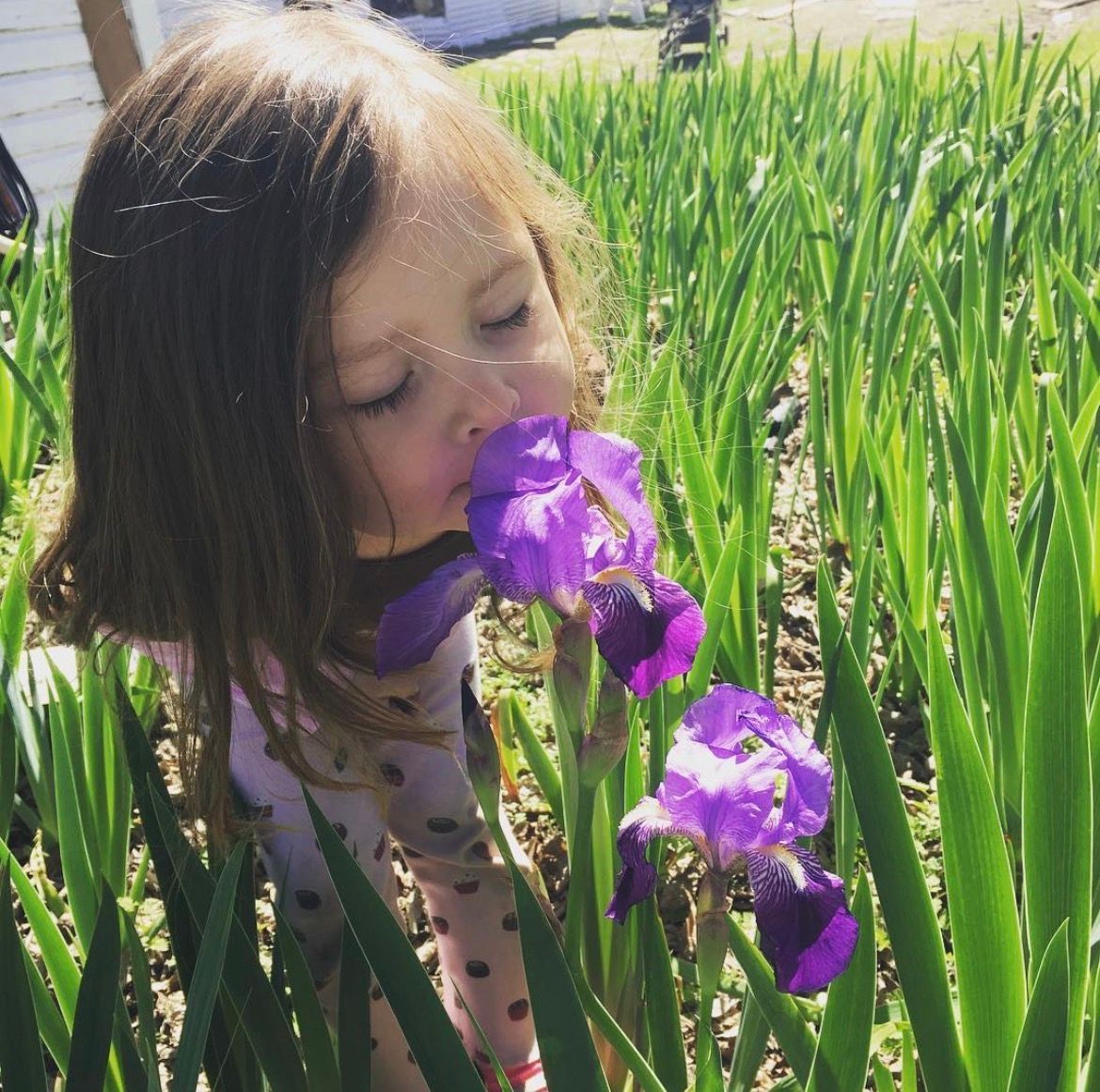
A patch of irises sits beyond our backdoor. The iris have grown there longer than I can remember. They may have been planted by my great grandmother, or the Craven family who lived here before her. I know they’ve weathered some hard years. One year, a child picked them all just as they bloomed. Some years, they bloom before the last winter freeze. Before we lived at the farm, I’m told the whole iris patch was mowed down with aims to kill it for good. I don’t believe the iris bloomed that year, but they did grow back to bear their purple blooms. This summer, my girls dug in the dirt beside the patch and uncovered a hidden brick pathway. Somebody gave careful thought to how and where to plant those hardy perennials. Though I’ve yet to learn how to give them care, they still greet me every year with their color. No matter how short a time the iris gets to bloom, no matter how the weather and the hands of others affect them, they follow their design. When the earth gets warm and damp after the cold, they turn beautiful again. My kids’ discovery of the brick pathway gave me more thought to them this year, and how resilient they are. A few difficult years in a row won’t stop them. Even a lawn mower can’t kill them. These trials seem to result in more hearty growth to come. An iris patch will produce blooms for an average of 3-5 weeks a year and the iris are content to stand as bare stalks for the rest of the time. It’s as if the iris is hardwired to know, even if a child picks her the very day she blooms, the whole year was worth it for the beauty she brought that day. So she’ll do it year after year. When I think of the one who planted the iris patch, I think of the human struggle to trust the goodness of what we share with our hands, and with our lives. Some seasons you bloom just before the freeze. Some seasons you are mowed down by life. Perhaps a perennial faith keeps choosing to trust there is purpose in the bloom before, even despite the freeze—so there’s purpose in opening again. Before I was born, hands planted a bulb in the dirt, not knowing who would enjoy it. And each day, hands are at work to share good gifts. In Scripture, Job spoke of the resilience of plants that sprout again after being cut down (Job 14:7). When he remembered them, he remembered hope. And how he needed hope. At the peak of bloom, Job’s life was mowed down. With all his livestock destroyed and his ten children killed, his flesh was eaten by pain, while his friends mocked him and his wife told him to go die. In Job’s grief, he compared his life to a withered flower (Job 14:2). Yet even amidst those thoughts, he remembered the plants which sprout again, and though his memory of hope was a small passing thought, it was there in the growth he’d witnessed before—buried deep within him. Rooted expectations are powerful no matter how softly they rise. Job’s life did bloom again. And perennial faith does not require that one never feel small, though it invites the soul to be awed by the simple memory of hope. “For there is hope for a tree, if it be cut down, that it will sprout again, and that its shoots will not cease. Though its root grow old in the earth, and its stump die in the soil, yet at the scent of water it will bud and put out branches like a young plant.” Job 14:7-9
When I was in the throes of my mid-twenties, feeling blindsided by the reality of life, someone I looked up to told me, “Whatever feels like love to you, feel free to go and do it.” There was both deep goodness and hidden instability in that moment. To understand why, you may need to know the season I was in. During most of my teen years, I struggled a lot with religious shame. I coped with it by giving myself a rigid dress code and pretending to be uninterested in boys because it made me feel more righteous. By now, I felt I’d lived enough hypocrisy in high school to last a lifetime. I wanted my twenties to be different, yet internalized mindsets don’t untangle on their own. With an early faith built largely on what I suppressed, I’d grown to fear many of my own desires—including everyday, ordinary impulses to share moments of connection with others. The habits of my younger years kept bleeding into the present. I needed to change something. I longed to freely let go of “cleaning my outsides,” so I could give attention to my inner life. Jesus’ words to the Pharisees left me feeling exposed. “Woe to you, scribes and Pharisees, hypocrites! For you clean the outside of the cup and the plate, but inside they are full of greed and self-indulgence” (Matt. 23:25). Though I longed for authenticity, I felt trapped by fear. What if I make the wrong move? I believed if I kept trying to give my energy to “keep the outside of my cup clean,” I would have nothing left for the inside. And I felt scared I’d take it too far. For me, cleaning the inside of my cup meant learning how to live my faith from desire more than duty. I wanted to live, not from obligation, but a life that genuinely resonated with the specific design of my person. I felt overwhelmed between what to throw out and what to hold onto, and I truly needed words of assurance. Don’t be afraid to practice love. “There is no fear in love, but perfect love drives out fear, because fear has to do with punishment. The one who fears is not made perfect in love” (1 John 4:18). I firmly believe it’s the essence of what my Christian mentor wanted me to know when the words were shared: “Whatever feels like love to you, feel free to go and do it.” On the one hand, those words ministered to me. They gave me the gumption that woke me from a kind of paralysis. And on the other hand, “whatever feels like love to you” is a phrase my mentor later wanted to rephrase. Of course, I knew I didn’t want to go crazy. There were certain moral lines I knew I wanted to stay inside. Yet, for sake of authentic faith, certain structures had to go…and I didn’t know which. My mentor’s advice made me wonder… maybe I can depend a lot more on an inner sense of love? Well, when I exercised the things that felt like love to me at the time, it resulted in damaged friendships, boundary issues and depression. Just like music needs certain structures to guide emotional expression, my love needed guardrails as well. I may as well have jumped on a stage, pulled out a banjo, and played whatever felt like music to me. (I don’t know banjo music.) The definitions I find of the word “music” vary greatly. Some emphasize words like “organization, structure, pattern, rhythm” while others emphasize words like “art, expression, emotion, experience.” The music I most enjoy has a great balance of both. Emotional expression without structure, or vice versa, can become either chaotic and annoying, or boring and empty. The downside of “whatever feels like love to me” is that it quickly becomes chaotic to the point of misery. It’s no wonder that when Paul instructed Timothy on how to lead well, he said, “The aim of our charge is love that issues from a pure heart and a good conscience and a sincere faith. Certain persons, by swerving from these, have wandered away into vain discussion” (1 Tim. 1:5-6). Paul didn’t want chaos for Timothy and offered structure for the mission. Scripture teaches authenticity, and it also teaches the structural pillars of health and joy. While my mentor’s initial advice didn’t share that structure, it still became a gift that helped me find courage to stop ignoring my heart. The moment when I considered “what feels like love” helped me acknowledge how my life at the time drained me. My heart felt unengaged. The cycle of duty and burnout I lived did not speak of harmony, and my life felt off course in ways hard to name. Proverbs warns that the wellspring of life comes from the heart and that we must care for that wellspring with vigilance (Prov. 4:23). If my heart is sending me alert signals that my way of life is draining me, wisdom requires me to notice. A heart built on duty, while desire goes ignored, is a heart where love needs room to breathe. In the book of Exodus, when Jethro saw Moses living out of a grueling sense of duty that left him completely empty, Jethro called Moses to pay attention, saying, “What you are doing is not good. You and the people with you will certainly wear yourselves out” (Ex. 18:17-18). The level of exhaustion Moses was serving from, left him where he could hardly live from love anymore. They found a solution which balanced responsibility with the genuine needs of Moses. When I become so afraid to listen to my heart that I ignore the moments which leave me weary and empty, I am invited to more. Jesus’ call is “Come to me, all who labor and are heavy laden, and I will give you rest” (Matt. 11:28). The instinct that love needs structure is entirely correct, yet love also requires emotional authenticity—and it’s entirely worth the risk to practice learning to balance both. It’s good to notice when a path leaves me struggling to love from my heart, and to consider what love would do. Love won’t rush me to decide a new way. Yet, it won’t leave me defeated by the fate of an empty life. The imperfect advice I received still helped me find the courage I needed, and we are loved by a God who takes our human attempts at love and redeems them for good. So, if you know moments of paralyzing fear yourself, I want to pass the encouragement on—even if I say it imperfectly. Don’t be afraid to go and practice love. While religious shame stifles your spirit, true structural health will protect it. The goal is a harmony of love that springs up from a tended inner life—from the rhythms of a clean heart, a clear conscience, and unfeigned trust in God.
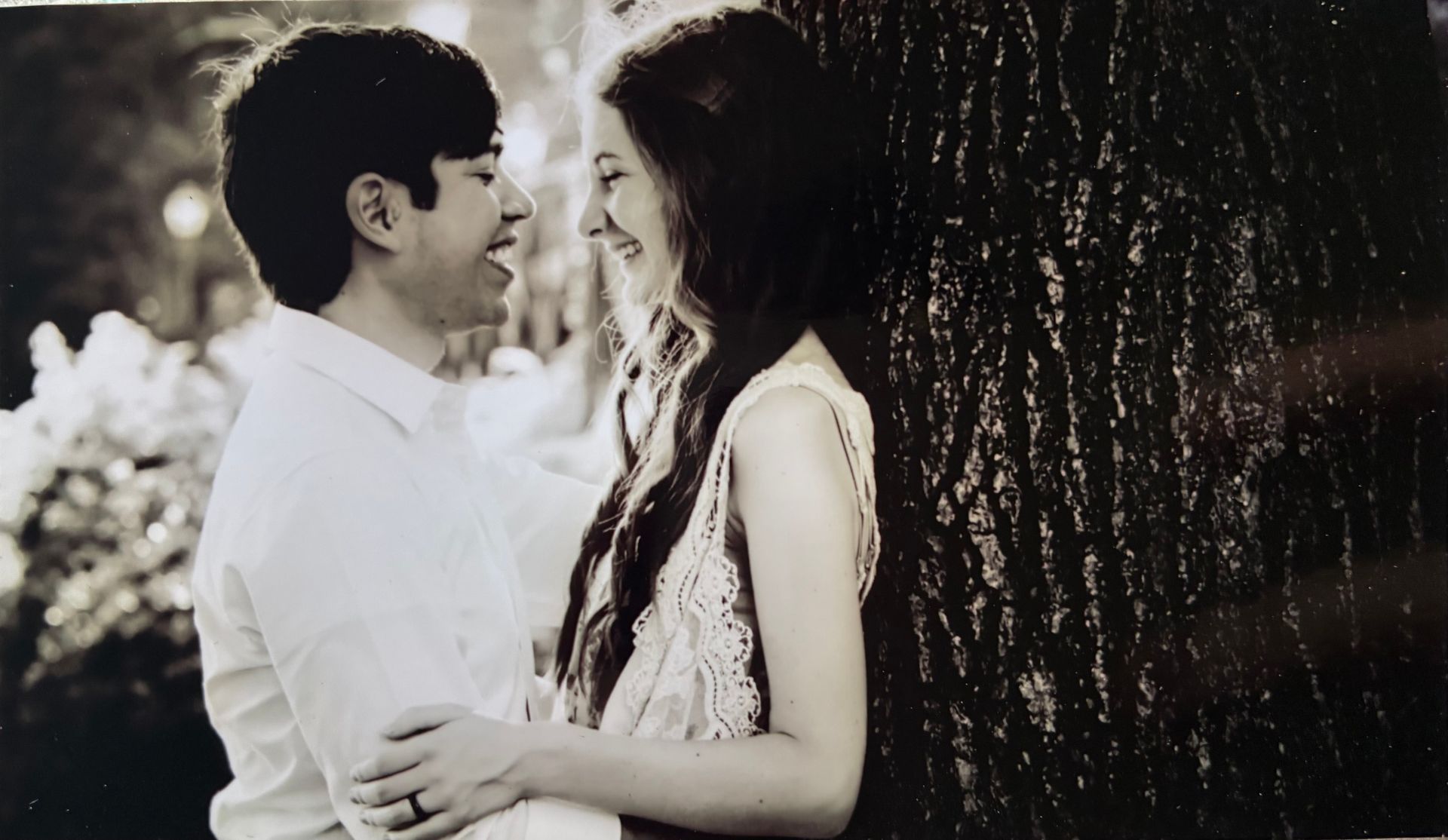
I once received a reprimand that shaped my view of love. A stern rebuke gave me sweet realization that love is a bias—a bias found beneath the surface of clear rationality. I find this true in the long haul, and in the new seeds of love too. My seeds of love found life on a Sunday. For at least a dozen weeks since I’d met Luiz, we’d hung around after church to talk. He’d even slipped me a note with his number on it one week. I spent a full two hours trying to decide how to write a one-line text message. When I heard he’d be in a speech competition, it caught my interest. As a regular attender of a Toastmasters club, he and another man would compete to give the most humorous speech. On the day of the competition, I stepped into the dim backroom of the Italian restaurant where their group met. I spotted Luiz and waved before taking a seat to watch the events unfold. The tables formed three sides of a square, with the fourth side open for the podium. Each chair faced the center. In the group of 25 or so, the room held more than strangers. I noticed Luiz’s sister and another woman from church. A man with a balding dome and a mustache gave his speech first. He spoke like the kind of uncle any kid would like to have and captured the room well. Then Luiz gave his speech about a childhood moment of self-consciousness. The joy in his face was what mesmerized me. He spoke with exuberance and I didn’t want to miss a second of how it shaped his bearing, or the way his eyes danced when he smiled. When it was over, in my delight to have witnessed the moment, it took me a minute to realize that the president of this Toastmasters club expected each person there to offer an evaluation one by one around the room. All of two more people would be offering their thoughts before it would be my turn. In my whole eighteen years, I’d never had to offer feedback on a speech before. I tried to catch fragments of what was said by the people who went before me but my thoughts raced too fast to catch much. I tried to mentally categorize what the elements of a speech might be, but everything I learned in speech class vanished from my brain. What could I say about Luiz’s presentation? How do you put language to the way a voice sounds? Something about pacing? His eyes. Oh dear. The moment arrived and I was asked which speech I liked best. The president’s pen hovered in the air ready to note my answer. “I liked Luiz’s speech best.” While my answer was different from those who answered before me, it was entirely truthful. I could at least lean on the truth. “And why did you like Luiz’s speech best?” he asked. “I liked Luiz’s speech because I like Luiz.” I tried to act as if the matter was settled and looked on to the next person. The man forced his pen flat on the podium and pursed his lips sternly before responding. “I will not allow for any bias in this Toastmasters club.” I followed my gut. “I’m so sorry but…I don’t think my bias can be helped.” This got an annoyed eye roll from the club president, but it also brought a smile from Luiz with eyes that crinkled in the corners. After dinner, he walked me to my car. Though he wasn’t named the winner, he said he felt like one. When I got his invite the next morning to go out for lunch, I didn’t take two hours to message him this time. Soon, we were seated at Jason’s Deli, table for two—I’m so glad objectivity didn’t win the competition. Today, I call him Nano and we have three kids. And a refusal to be starkly rational may leave us with uncertain moments, but it’s essential to the mix that makes up a life of love. The long-haul of love needs a determination to shed clinical approaches, especially when it’s tricky. Maybe there’s a type of bias that shows the magic the human soul was made to be. Maybe embracing it a few thousand times over is all that love might ask—to bear all things, believe all things, hope all things, endure all things (1 Cor. 13:7).
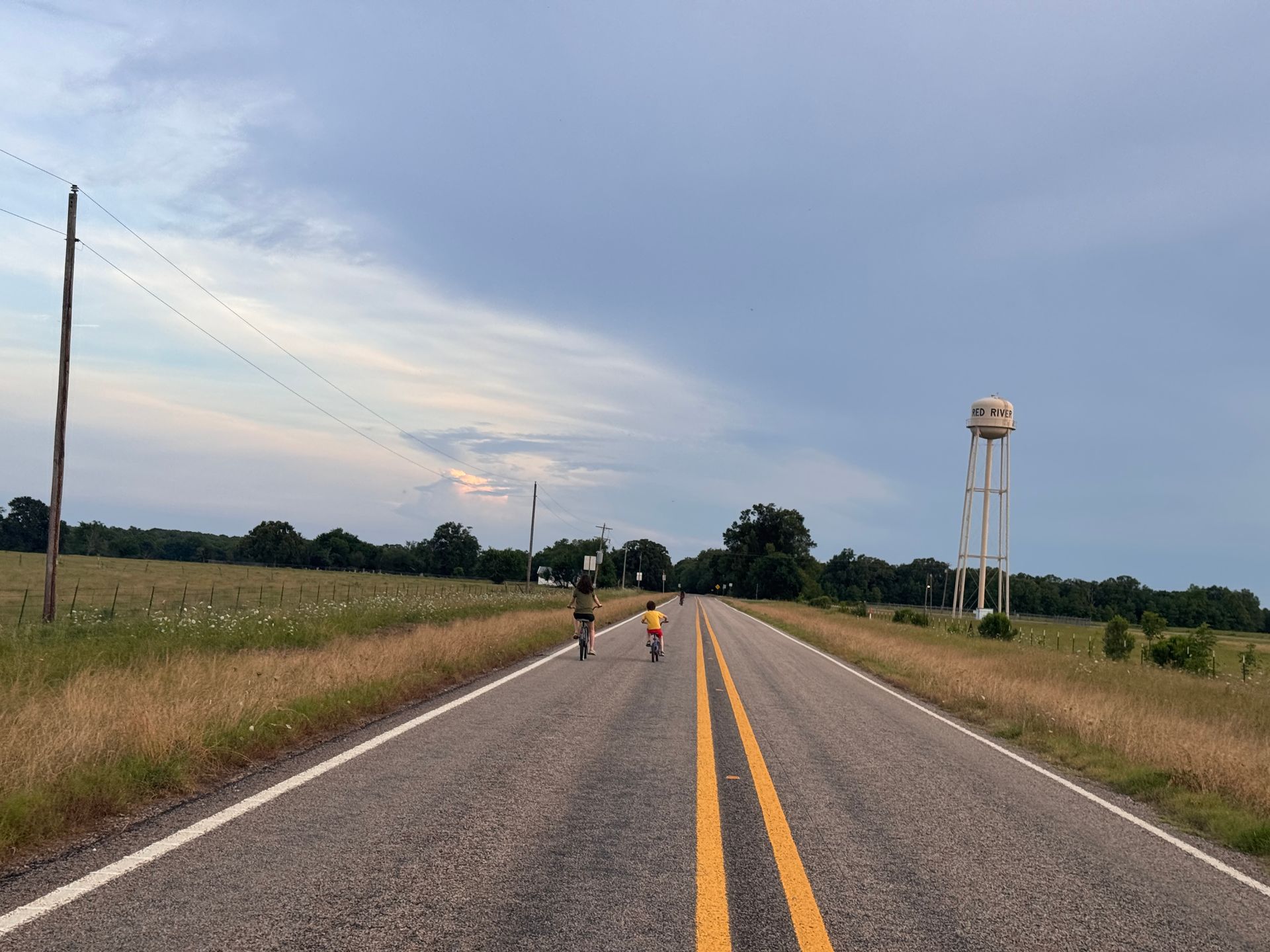
The moments that let us down often do a quiet work to make way for a time, far in the future, that takes our breath away. On a visit to my grandpa’s farm as a child, my cousins and brothers and I walked down the farm-to-market road with our eyes set on the water tower. It sits a mile or so down the road and we aimed to walk all the way there. The green fields stretched out on either side of the road, and we strode down the center of a wide open universe. The grand goal was to go and stare at the tower’s lofty stature against the open sky, take our pictures there, and come home to declare our feat. But we were young, our legs grew tired, and sunset loomed. We did take pictures with the yellow flood gauge along the road, but we didn’t make our goal. The next day, my aunt drove my cousins to the water tower for pictures. This idea didn’t feel as grand to me though. I can’t remember if we ever tried again, but the water tower trek stuck in my memory. In later years, I would sometimes peer in that direction and remember how proudly we walked toward it that day. On some visits we pulled our aunt’s and uncle’s old bicycles out of the chicken house and tried to ride them down the road. But the rusty frames and aged tires never carried us far. I can’t remember if we hoped to ride them to the water tower. I just know we rode in that direction. Nano and I have lived at Grandpa’s old farm for ten years now. Toward the tail end of the school year, our son—our youngest child—learned to confidently ride his bike without training wheels, and the family usage of our bicycles has ramped up. A couple weeks back on a Sunday evening, our kids begged for a family bike ride and Nano and I readily agreed. The air grew crisp with the dipping sun, and clouds squiggled across the sky, ready to play. I imagined we would ride to the half-mile point, then head back as we’ve done before. But when we came to that half-mile point where another road crosses ours, the family kept riding. At the sight of the water tower, my first memory of it came flooding back. I remembered my young excitement to travel all the way there. I remembered the old rusty bikes. Suddenly I felt as if an old forgotten dream might be coming true in its own way. Soft glowing lines shone from the clouds and the smiles on my family glowed too. With proud delight we stopped when we came to the sight. The decision wasn’t spoken, just arrived at. All five of us stood beside our bikes staring up at the towering form. Nano snapped our picture and the moment felt perfectly right. In the ten years we’ve lived here I’d never walked or rode my bike to the tower before. I’d nearly forgotten that childhood hope to approach it on the road under the open sky. Somehow, I’d never imagined doing it with my husband and children. Yet it just happened, and it felt glorious. When we rode away with my daughter beside me, I kept watching the tower make its statement in the golden gleam of evening. Here in this moment, I didn’t want to forget my girl’s brown hair, the painted sky and the whizzing of our wheels spinning. The evening spoke plainly. Even though disappointments had filled my mind that morning, that very same day brought the sweetest fulfillment to an old childhood hope. The disappointments of yesterday made today that much sweeter. Today’s letdowns may soon be distant memories. Then, one day when you don’t expect them, they may rise up again to meet you—with a kind bliss you’d never know if the disappointment had never been yours. Maybe under the sky of a Father who gives good gifts, the sky of a God who set eternity into our hearts, maybe every disappointment is intended as a foreshadow of the joy He longs to share with us somewhere down the road.
The people who drew near to Jesus were the despised, the sinners, the children. Maybe those who have little to lose in the way of reputation have the clearest view. “Now the tax collectors and sinners were all drawing near to hear him. And the Pharisees and the scribes grumbled, saying, ‘This man receives sinners and eats with them.’ “So he told them this parable: ‘What man of you, having a hundred sheep, if he has lost one of them, does not leave the ninety-nine in the open country, and go after the one that is lost, until he finds it? And when he has found it, he lays it on his shoulders, rejoicing’” (Luke 15:1-5). In this same scene in Luke 15, Jesus also shared the story of the prodigal son and the father who loved him with reckless generosity. Before an audience who continually looked down on the sinner, Jesus proclaimed the unquestionable value of the runaway in our heavenly Father’s eyes. Dane Ortlund writes, “Though the crowds call [Jesus] the friend of sinners as an indictment, the label is one of unspeakable comfort for those who know themselves to be sinners. That Jesus is friend to sinners is only contemptible to those who feel themselves not to be in that category” ( Gentle and Lowly , p. 114). The most lowly of society saw Jesus as more than approachable. Children bounded up to him. The outcasts came close. The nature of Jesus’ presence gave them confidence to lean in. Here is someone who sees me and doesn’t look away. Here is someone who speaks of God as if God wants…me…not loyalty to a system I could never pretend to conform to. When they saw God through Jesus, they didn’t feel daunted. When He said, “Come to me, all who are weary” (Matt. 11:28), they recognized the God in whose image they’d always been made. The Good Shepherd freed them to shed heavy-laden expectations and enter worship with rest, right there at His table. How did children know they didn’t have to keep a respectable distance? How did the sinners learn they were free to join the feast where Jesus dined? They experienced His presence. After years spent hearing of a God who doesn’t come too close, worn and weary people experienced something new. Any fear they’d felt of a distant, condescending God, met a Person who reshaped that narrative. How many of us have ever felt afraid that God saw us as disappointments? Too dirty for Him to touch. Too fickle for Him to sit with. When have we been apprehensive to listen to the steady Voice who waits for us to hear with our hearts? “Take my yoke upon you, and learn from me, for I am gentle and lowly in heart, and you will find rest for your souls” (Matt. 11:29). Jesus’ presence keeps speaking. The Word cannot be silenced. Sometimes a small glimmer of Him shines through the fractured vessels of people. Always, He’s close to all who seek His presence. Learn from me, He says. We’re free to pull up a chair, to bound into His heart with our careworn self. Here every fear is shared without shame, and every nervous soul is met with the perfect relief of a Shepherd who delights to feast with His own. Some may say to ignore fear. Trudge on. Bear the heavy load. But when we can be guests at a table of grace where fear can be remade, what more could a heart want than to come in earnest to the Shepherd’s gentle love? “Take my yoke upon you…for my yoke is easy and my burden is light” (Matt. 11:29-30).
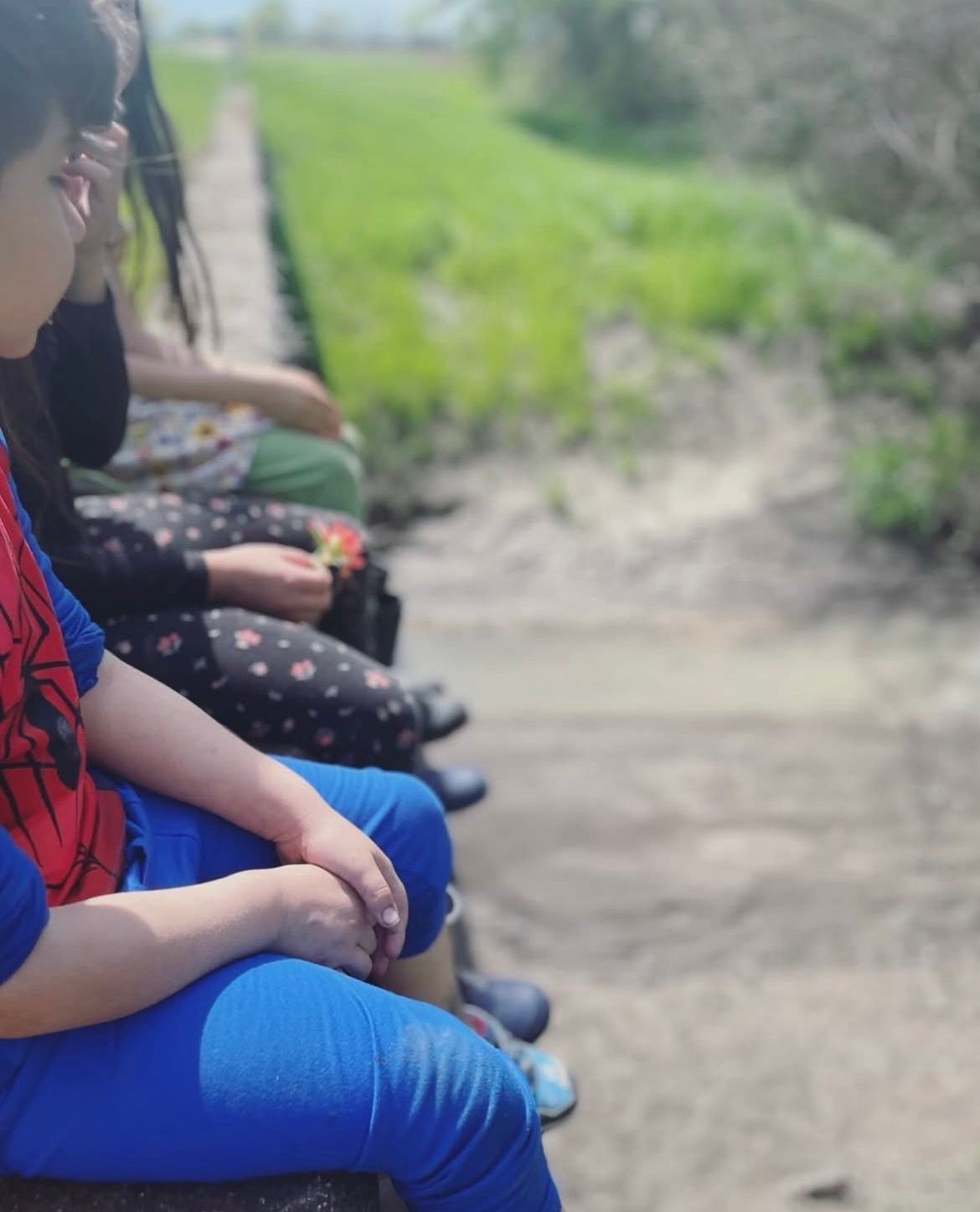
When goodness is in reach, I don’t always recognize it. This is true for mothers, and for little boys too. A few nights before Easter, I pulled into the Family Dollar after dark and found the plastic eggs and candy for my son. So many of the Easter baskets came in pinks and yellows with flowers and bows, but I did find a green plastic bucket with a cute dinosaur face—bright, round eyes, pointy ears and a jolly smile. I wondered if it was too “young” for my eight year old, but hoped for the best. When I arrived home to show my findings to Gideon, he gasped in delight and dutifully took his place at the table to fill twelve eggs with candy for the class egg hunt at school. Success! Or so I thought. The next morning my daughters woke earlier than normal, determined to make pancakes before school. Comforting wafts of buttery goodness drew the whole family to the kitchen. Gideon called for me with outstretched arms and showed me where he had written his name on his bucket. The morning felt unusually cheery for its early hour and the whole tone of the house felt magical. But soon, a shift came in the eyes of my boy. Plates began to go onto the table. Next to the green bucket. Gideon stared. Nano noticed something amiss and caught my eye. With little shoulders slumped, our boy wandered off to the bedroom. His daddy saw his welling eyes and urged me to follow. Sitting next to Gideon on the bed, I said he must be sad about something and wondered aloud what it was. “The bucket,” he said. “I don’t want to take the bucket to school.” This made sense to me. The time for school drew closer and he must’ve decided the bucket was too young for him after all. “You don’t have to take that bucket,” I told him. “I’ll bet we can find something else…okay?” He nodded. “And Mommy?” “Yes.” “Can you give that bucket back to the store?” I urged him not to worry about that, but he pressed me further. He wanted the bucket gone. In the kitchen, my daughter told me where she had seen Gideon’s Spider-Man bucket from Halloween and we decided that might work. With some help from Nano, we found the bucket in the old smokehouse before Gideon joined the girls for breakfast. While I cut my boy's pancakes, he confirmed that Spider-Man buckets are better than dinosaur buckets. Later when the kids were at school, I debated whether to keep or toss the one-dollar bucket, before I wrapped it in a grocery bag and dropped it in the trash bin. At the school pick-up that afternoon, Gideon announced a change. “Mommy, I do want my dinosaur bucket.” He planned to use it for another egg hunt over the weekend. The second he stepped out of the car at home, he asked me where to look. I assured Gideon I would get his bucket and sent him inside before doing a quick dumpster dive in the front yard. The windows revealed my secret though, and he stood laughing at me when I walked in the door. Then the bucket, though shunned that morning, became a joy to him again. When I asked him what changed his mind, he just said he realized he could still use it. He saw a purpose for it. I can relate to him. I often take time to accept a situation. I want to know there’s good purpose for the stretching seasons I go through. When I struggle to see the purpose, I wrestle with accepting the season. Sometimes the best gifts begin to arrive in ways that look more like loss than gift. Then, when dashed hopes are being redeemed into something new, my heart is slow to recognize that beauty. What helps a worn-down heart to see a path as worth accepting? God answers prayers, even through pain. I can stare an answered prayer in the face and not see the faithful hand of my Father. I can hear the beauty of the resurrection and not tune in to the softest ripple of its melody amidst the days I live. On the road to Emmaus, Cleopas and his friend had heard news of the empty tomb, yet their hearts locked in on memories of disappointed hopes. When the resurrected Jesus began to walk with them on their journey, they knew him only as a fellow traveler—one who was quite uninformed. When Jesus asked them what they were talking about, “they stood still, looking sad” (Luke 24:17). They shared with their new companion about Jesus, the mighty prophet. They lamented how they had hoped he would be the one to redeem Israel, until he was killed. The women who claimed that Jesus was now alive seemed to concern them. The empty tomb stirred their worry. Jesus gently rebuked their slowness of heart—reluctant to believe what they’d already heard. He recalled the prophecies they knew, yet they heard it differently this time. His unfolding of the Scriptures enlightened their understanding. That evening they begged him to have dinner with them. In the moment he broke bread, they knew him as Jesus. Immediately, he vanished, and they said, “Did not our hearts burn within us while he talked to us on the road, while he opened to us the Scriptures?” (Luke 24:32) Jesus stayed in bodily form beside them until their hearts could see that the death he died, and even their disappointed hopes, were all for good. Their Master walked with them to help them see God’s good purpose and a fire kindled inside them. His presence ignited their acceptance of the story. The breaking of bread, the moment that brought memories, the burning in their hearts, all helped them see the goodness right there. Adam McHugh says, “When the two disciples who walked to Emmaus reflected on their night with that oddly familiar stranger, they marveled that their hearts burned within their chests as he spoke. A central part of the Christian spiritual life…comes in paying attention to the moments when our hearts are burning. In those times, we may just find that we are not alone” ( The Listening Life , p. 184). For the seasons of life we don’t want to accept, maybe we’re not alone. When I hear that the ugliest losses bear the most precious purpose to my Father, something burns in my heart and I don’t want to brush past this. The memories of disappointed hopes cannot truly outweigh the memories of the One who always knows how to rekindle my joy. For all it contains, this season of my life will bear good purpose. I do want this bucket.
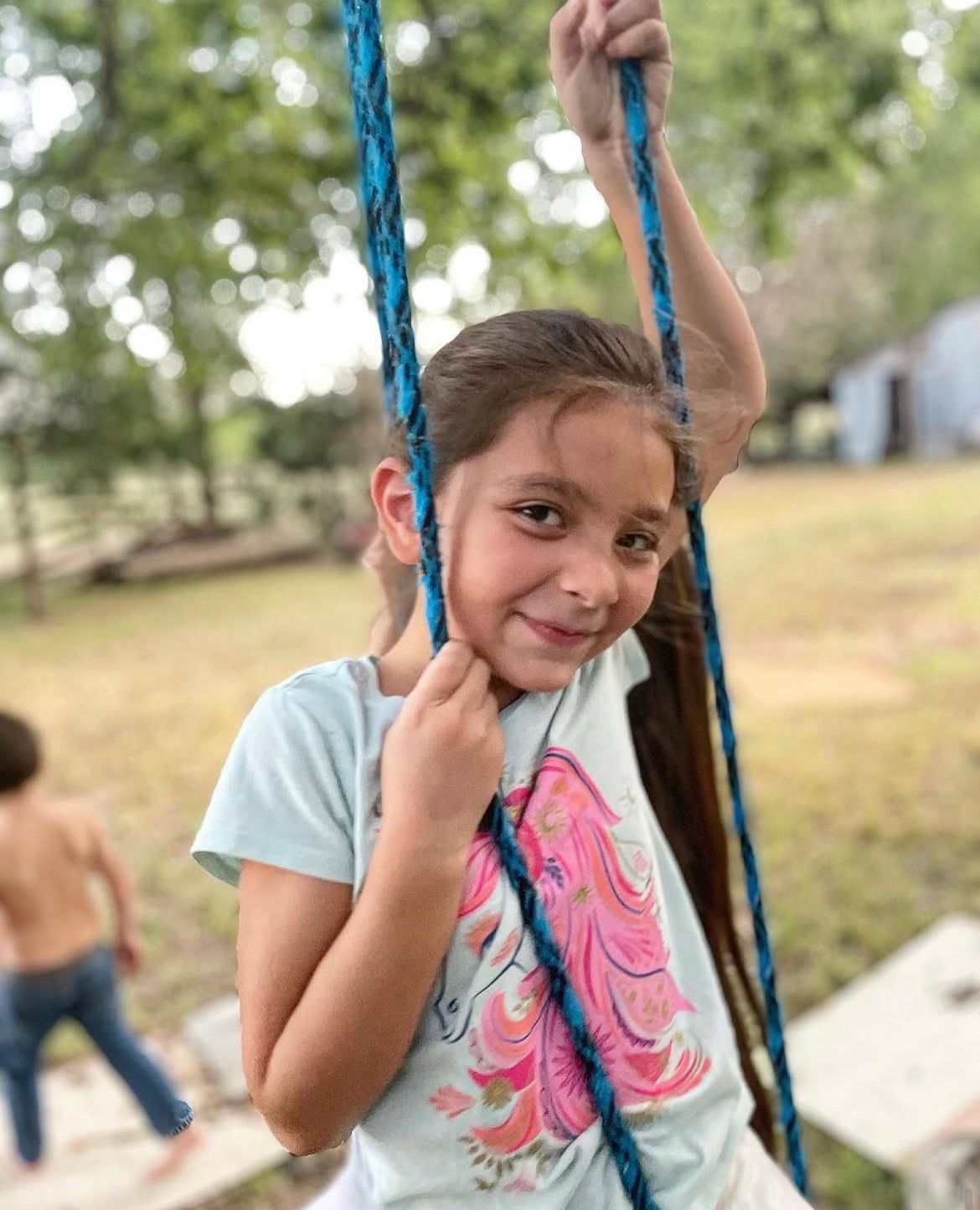
There is something about the tiny ways we experience a dream coming true that changes our outlook. Whether it’s an idea brought to fruition, a task finished, a plan fulfilled, these moments train us to believe more is possible. There are seasons when my soul needs to witness these tiny wants coming true while I guard my heart, find new energy and pray for grace to refuel my hope. In those times, if I try to rush myself, push ahead, I don’t leave room for the autumn and winter seasons of my soul. Just as all of life needs times of letting go, and the silence of snow, so there are places in my soul that need what is steady, what is slow. When old seasons of life have died, it’s time to hunt for beauty in the little shoots of life. Here are a few ways this looks for me right now. While these practices are small, they are exercises that help me look forward. Right now, I’m wanting to meet new people at church, and needing to keep it simple. This week I met Sally and Renae. I had brief conversations with each of them. I wrote down their names to help myself remember. For years, I’ve been wanting to read historical fiction again. I finally started. A few days ago, I finished a book set in the early nineteen hundreds. Then, I began another, set a few centuries earlier. I’ve wanted to adjust my morning routine in a way that gets me moving and helps me feel grounded. For the last month I’ve rolled out my yoga mat most weekday mornings and used it for ten minutes. As short a time as it is, it helps me feel alive knowing I’m keeping a promise to myself. When I see my small hopes play out as I come to the last page of a book, tell my husband about new people, and spend regular mornings on the yoga mat, the small things stack up. Something inside me begins to notice that I have choices in life. I wished for a reality and it came to happen. These small practices help me embrace life-giving rhythms, even while honoring the season I’m in and the pace of my soul. It’s freeing to acknowledge where I am. When I admit that I’m not in a season of summer plenty, and admit my capacity for life has limits, this helps me live more fully in the gift of today. While life is communal, we experience it individually too. Parker Palmer writes, “We must come together in ways that respect the solitude of the soul…” The solitude of the soul is our garden to tend. It’s different from our neighbors’. Every garden needs water and light to grow, and sufficient protection to help it thrive. Yet, each garden must be tended according to its specific needs, with consideration for the season it’s in. When our gardens are tended according to their needs, there are times of harvest that bring nourishment to others. The solitary tending brings communal blessing. Each season always had purpose. The Lord who knows the necessities of every garden doesn’t rush us forward. He knows the slow work of growth and invites us to stay in pace with Him as He makes the way for tomorrow. When the season calls us to hunt for small shoots, and care for tiny dreams, He honors the solitude within us. The secret place within is always where He waits. A promise: “He who supplies seed to the sower and bread for food will supply and multiply your seed for sowing and increase the harvest of your righteousness” (2 Cor. 9:10).
At times, words about goodness have felt vanilla to me, like preschool basics. God is good. The sky is blue. I’ve longed for a goodness that means more than empty positivity. More than rote fact. More than a decade ago, when I was newly married and just entering my twenties, Nano and I sat with a group of church friends who were planning a Thanksgiving gathering. One woman suggested inviting the guests to share four things they were thankful for. Everyone seemed to like her idea. Internally, I sighed. I didn’t understand this and thought we may as well recite our grocery lists to each other. I wondered what might fit what they were looking for, while also feeling more meaningful. I shared the first thought that came to mind. “What if we share one thing we’re thankful for and then four reasons why we’re thankful for that?” They blinked at me and offered polite words acknowledging my idea. The day of the gathering came and I listened as people shared their four-point lists of things they were thankful for. I can’t remember if I recited a list myself. I just remember looking around the room at this group—most of whom had seen many more years of life than I had. I couldn’t understand why this didn’t feel so mundane to everyone else. Thirteen years later, the memory stays with me. I put myself back in that room at the age I am now, and I’ve still seen less years than most of them. Maybe though, I’m a little closer to understanding what they knew. When dreams you’ve hoped for blow away in the wind, when paths you walk turn to somber roads, when the sky around you grows dark, the clouds teach you what you never could’ve learned in the light. Along the journey of life’s disappointments, the soul learns how to see that no matter what blows away, no matter how grave the story, there is always a bird who still sings. The rote facts you learned in preschool become lifelines that save you. God is good. The sky is blue. When a voice inside asks me what I have left, there is still the voice of a child in my distant memory. She sings her alphabet, letter by letter, and somehow every syllable of ordinary life becomes the sweetest song I’ve ever heard. Built into the fabric of this life, into the sound of every letter we work with each day, is a Voice that echoes quietly beneath every harsh blow. God saw all that he had made, and it was very good. He looked with delight and said, “You are very good.” From the beginning, goodness was there. Today, His goodness remains. Last week, my family munched popcorn and watched Tom Hanks in Castaway. After he loses everything, then years later loses everything again, he tells a friend what he knows. “I know what I have to do now. I’ve got to keep breathing. Because tomorrow the sun will rise. Who knows what the tide will bring?” The sun still rises, and the goodness God made in the beginning is still alive. I remembered myself at age twenty. I sat in a room where I couldn’t hear more than a grocery list. I wanted to hear the reasons why . Little did I know that when we recognize what is good, we are naming the reasons why —the reasons why we breathe. These are the signs there is goodness. This is the meaning that keeps us open to meet another day.